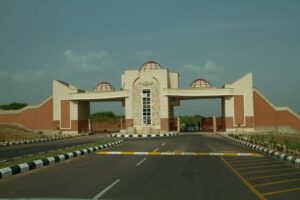
🌍 What Happened — At a Glance
The management of Kwara State University (KWASU) has ordered the immediate relocation of staff and students from its Ilesha-Baruba Campus to the main campus at Malete Campus — following intensifying security risks around the Ilesha-Baruba area.
This decisive move reflects growing concerns over a rise in banditry, kidnappings, and violent crime in parts of Kwara State — prompting the university to prioritize safety above continuation of academic activities on the satellite campus.
Why It Matters: Safety Over Expansion
- Ilesha-Baruba campus was initially part of KWASU’s expansion plan — intended to house the Faculty of Agriculture to leverage the region’s natural resources.
- However, even before full operation began, many students had already voiced deep concerns over safety. In 2025, the campus opening triggered protests from the student body, citing frequent attacks and kidnappings along the Ilorin–Ilesha Baruba highway.
- Given the real threat to life and security, the management concluded that a temporary suspension of activities is the responsible action until conditions improve.
The Immediate Impact
- Staff and students have been asked to move with only “essential items.” The university says safer accommodation will be arranged at Malete as soon as possible.
- The relocation is described as temporary — the campus will remain closed “until the security situation is stabilised and normal academic activities can safely resume.”
- The shutdown affects not just classes but also broader campus life: student housing, lab access, and any ongoing projects are halted for the time being.
Wider Context: Security and Education in Nigeria
The KWASU decision underscores a troubling reality facing many educational institutions in Nigeria — the fragility of security across some regions, particularly those affected by banditry, kidnappings, and terror-related activities. Institutions that once hoped to expand are now forced to reconsider due to safety concerns.
In the case of Ilesha-Baruba, what was envisioned as a centre for agricultural education and rural development has become emblematic of how insecurity can derail educational progress.
What Needs to Happen — Voices from Stakeholders
- For students and staff: Full clarity and support — timely information about relocation logistics, safe housing, and academic continuity.
- For authorities and security agencies: Stronger, sustained presence in vulnerable areas; proactive measures to secure crucial routes and communities (e.g. the Ilorin–Ilesha Baruba highway).
- For the university leadership: Transparent communication about conditions for resumption; possibly re-assess future expansion plans with thorough risk evaluation.
A Hope for the Future
While this relocation is abrupt and unsettling, the safety-first decision by KWASU management — though painful — is undeniably the responsible course. If security can be restored, Ilesha-Baruba may yet become the thriving academic community it was intended to be. But until then, students deserve a stable, safe environment — and that must remain non-negotiable.